
Construction Fall Protection Training for OSHA 29 CFR Subpart M and 1926.503
Our 4-Hour Fall Protection Competent Person training course equips construction professionals with the advanced knowledge needed to recognize fall hazards, inspect fall protection systems, understand equipment limitations, and take corrective action when unsafe conditions exist.
Falls remain one of the most serious hazards in construction. Guardrails, warning lines, hole covers, personal fall arrest systems, safety nets, controlled access zones, and rescue planning only work when they are selected, installed, inspected, and used correctly. This course helps supervisors and workers understand what safe work at height actually requires.
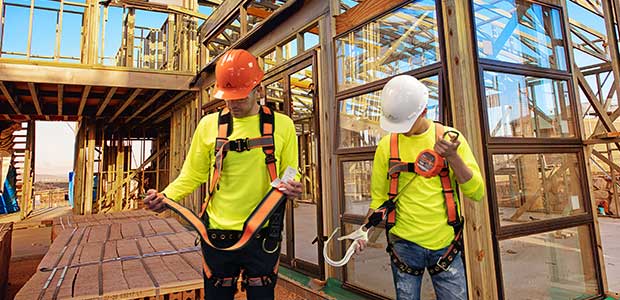
COURSE HIGHLIGHTS
FALL PROTECTION COMPETENT PERSON TRAINING TAUGHT BY SAFETY PROFESSIONALS
This 4-hour course is designed to meet the training requirements of OSHA 29 CFR Subpart M Fall Protection. OSHA 29 CFR 1926.503 training requirements are also addressed, along with applicable fall protection requirements found throughout OSHA construction regulations and ANSI standards for fall protection equipment.
The course is built specifically for employees who need the advanced knowledge required of a competent person.
A competent person is designated by the employer and must be capable of identifying existing and predictable hazards, inspecting fall protection systems, stopping work, and requiring corrective action.
Topics include:
OSHA Fall Protection Requirements: Understand OSHA 29 CFR Subpart M and 1926.503 training requirements.
Competent Person Duties: Learn the inspection, hazard identification, corrective action, and stop-work responsibilities of a competent person.
Fall Hazard Recognition: Identify the nature of fall hazards in construction work areas.
Fall Protection Systems: Understand the use and operation of guardrails, personal fall-arrest systems, safety nets, warning lines, safety-monitoring systems, controlled-access zones, and other fall-protection methods.
Equipment Inspection: Learn how to inspect harnesses, lanyards, self-retractable lifelines, connectors, and anchorage points.
Harness Fit and Use: Demonstrate correct harness fitting and understand proper connection methods.
Roofing and Low-Slope Work: Review warning lines, safety monitoring, mechanical equipment limitations, and low-slope roofing concerns.
Material Handling and Overhead Protection: Understand safe procedures for handling and storing materials and erecting overhead protection.
HANDS-ON PRACTICAL TRAINING
This course includes hands-on activities and a knowledge assessment to help participants apply fall protection concepts in real construction-site conditions.
Training may include:
- Harness inspection
- Harness fitting
- Lanyard and self-retractable lifeline review
- Anchorage point discussion
- Fall protection equipment inspection
- Guardrail and warning line review
- Hole cover and skylight hazard discussion
- Fall hazard recognition scenarios
- Competent person decision-making examples
- Knowledge assessment
WHO SHOULD ATTEND?
This course is ideal for:
- Construction supervisors
- Foremen
- Competent persons
- Site safety managers
- General contractors
- Subcontractors
- Roofing supervisors
- Workers exposed to fall hazards
- Employees working on elevated surfaces
- Employees using personal fall arrest systems
- Maintenance personnel working at height
- Crews working near the leading edges
- Workers involved in scaffold, roof, steel, concrete, or elevated platform work
- Anyone supervising or working at heights on construction sites
WHAT YOU’LL RECEIVE
Upon successful completion of the course and required exam, participants receive:
- Course Completion Certificate
- Training aligned with OSHA 29 CFR Subpart M
- Training aligned with OSHA 29 CFR 1926.503
- Understanding of competent person duties
- Knowledge of fall hazard identification
- Practical understanding of fall protection systems
- Training on inspection and use of personal fall arrest equipment
- Awareness of ANSI equipment considerations
- Hands-on activities and knowledge assessment
It is recommended that a refresher course be taken every 3 years.
WHO SHOULD ATTEND?
This course is ideal for:
- Construction supervisors
- Foremen
- Competent persons
- Site safety managers
- General contractors
- Subcontractors
- Roofing supervisors
- Workers exposed to fall hazards
- Employees working on elevated surfaces
- Employees using personal fall arrest systems
- Maintenance personnel working at height
- Crews working near the leading edges
- Workers involved in scaffold, roof, steel, concrete, or elevated platform work
- Anyone supervising or working at heights on construction sites
WHAT YOU’LL RECEIVE
Upon successful completion of the course and required exam, participants receive:
- Course Completion Certificate
- Training aligned with OSHA 29 CFR Subpart M
- Training aligned with OSHA 29 CFR 1926.503
- Understanding of competent person duties
- Knowledge of fall hazard identification
- Practical understanding of fall protection systems
- Training on inspection and use of personal fall arrest equipment
- Awareness of ANSI equipment considerations
- Hands-on activities and knowledge assessment
It is recommended that a refresher course be taken every 3 years.
WHY CHOOSE OUR TRAINING?
SAFETY THAT PROTECTS WORKERS BEFORE THE FALL HAPPENS
Fall protection is not just handing someone a harness. A harness does not prevent a fall. It helps stop a fall after it happens. The real goal is to recognize hazards early, choose the right protection system, inspect equipment, and plan the work before workers are exposed.
Support OSHA Compliance: This course helps employers address OSHA 29 CFR Subpart M and 1926.503 fall protection training requirements.
Build Real Competent Person Knowledge: A job title does not make someone a competent person. Training equips supervisors and crew leaders with the knowledge needed to inspect, identify hazards, and stop work when necessary.
Improve Fall Hazard Recognition: Participants learn how to identify leading edges, unprotected sides, holes, skylights, roof edges, low-slope roof hazards, and unsafe work areas.
Strengthen Equipment Inspection: Workers learn how to inspect harnesses, lanyards, connectors, self-retractable lifelines, and anchor points before use.
Reduce Serious Injury Risk: Proper fall protection planning can help prevent fatalities, severe injuries, suspension trauma, and rescue delays.
Improve Worksite Accountability: Competent persons need the authority and confidence to require corrective action when fall protection is missing, damaged, or misused.
COURSE TOPICS INCLUDE:
OSHA FALL PROTECTION REQUIREMENTS
- OSHA 29 CFR Subpart M
- OSHA 29 CFR 1926.503
- Employer responsibilities
- Employee responsibilities
- Competent person responsibilities
- Training requirements
- Fall protection plan awareness
- Documentation awareness
COMPETENT PERSON DUTIES
- Employer designation
- Fall hazard identification
- Inspection responsibilities
- Corrective action authority
- Stop-work authority
- Fall protection system evaluation
- Employee oversight
- Recognizing foreseeable hazards
FALL HAZARD RECOGNITION
- Unprotected edges
- Leading edges
- Roof edges
- Floor openings
- Wall openings
- Skylights
- Holes larger than 2 inches
- Elevated work areas
- Falling object hazards
- Improper equipment setup
- Unsafe access points
FALL PROTECTION SYSTEMS
- Guardrail systems
- Personal fall arrest systems
- Safety net systems
- Warning line systems
- Safety monitoring systems
- Controlled access zones
- Fall restraint systems
- Positioning systems
- Overhead protection
- Fall protection plans
GUARDRAIL SYSTEMS
- Guardrail height requirements
- Midrail placement
- Top rail strength
- Cable guardrail considerations
- Flagging requirements
- When guardrails are appropriate
- Passive fall protection benefits
- Guardrail inspection concerns
WARNING LINE SYSTEMS
- Warning line placement for roofing work
- Warning line height
- Flagging requirements
- Stanchion requirements
- Warning line limitations
- When warning lines may be used
- Worker responsibilities around warning lines
HOLES AND SKYLIGHTS
- Hole cover requirements
- Covers for openings larger than 2 inches
- Secure cover placement
- Clear marking of covers
- Load capacity requirements
- Skylight fall hazards
- Preventing accidental displacement
PERSONAL FALL ARREST SYSTEMS
- Full body harnesses
- Lanyards
- Self-retractable lifelines
- Connectors
- Anchorage points
- Deceleration devices
- Fall clearance
- Swing fall hazards
- System compatibility
- Proper use and limitations
HARNESS USE AND INSPECTION
- Correct harness fitting
- D-ring position
- Strap adjustment
- Buckle inspection
- Stitching inspection
- Webbing inspection
- Chemical or heat damage
- Removing damaged equipment from service
- Employee pre-use inspection
LANYARDS AND SELF-RETRACTABLE LIFELINES
- Web lanyard inspection
- Shock absorber inspection
- Length considerations
- Fall distance limits
- Self-retractable lifeline inspection
- Leading-edge considerations
- Retraction function
- Proper storage
- Removing equipment after a fall
SNAP HOOKS AND CONNECTORS
- Self-closing snap hooks
- Self-locking snap hooks
- Double-action locking mechanisms
- Connector compatibility
- Roll-out prevention
- Strength requirements
- Inspecting for corrosion, cracks, deformation, and damage
ANCHORAGE POINTS
- Proper anchorage selection
- Anchorage strength awareness
- Engineered anchor systems
- Horizontal lifelines
- Compatibility with fall arrest equipment
- Avoiding improper anchor points
- Planning anchor locations before work begins
LOW-SLOPE ROOFING WORK
- Warning lines
- Safety monitoring systems
- Mechanical equipment limitations
- Controlled access areas
- Material storage near edges
- Worker movement near the roof edges
- Fall protection planning for roofing activities
MATERIAL HANDLING AND OVERHEAD PROTECTION
- Safe material storage
- Preventing falling object hazards
- Handling materials near edges
- Erecting overhead protection
- Keeping walkways and work areas clear
- Protecting workers from elevated work
RESCUE PLANNING
- Why rescue planning matters
- Suspension trauma awareness
- Prompt rescue after a fall
- Communication during emergencies
- Rescue equipment considerations
- Employee roles during rescue
- Planning before elevated work begins
COMMON FALL PROTECTION MISTAKES THIS COURSE HELPS PREVENT
ASSUMING A HARNESS PREVENTS FALLS
A harness does not prevent a fall. It arrests a fall after it happens. Workers can still be seriously injured if the system is not planned, fitted, connected, and rescued properly.
FAILING TO INSPECT EQUIPMENT
Harnesses, lanyards, self-retractable lifelines, connectors, and anchors must be inspected before use. Damaged equipment must be removed from service.
USING IMPROPER ANCHORAGE
Not every beam, pipe, rail, or structural component is a safe anchor point. Anchor selection must match the fall protection system and expected forces.
IGNORING FALL CLEARANCE
A fall arrest system needs enough clearance to stop the fall before the worker hits a lower level.
OVERLOOKING SKYLIGHTS AND HOLES
Skylights and floor holes can be deadly if they are not properly protected, covered, secured, and marked.
MISUSING WARNING LINES OR SAFETY MONITORING
Warning lines and safety monitoring systems have specific use cases and limitations. They are not a free pass to work unprotected near an edge.
NOT PLANNING FOR RESCUE
Fall arrest is not the end of the emergency. Workers suspended in a harness need a prompt rescue.
SAMPLE COURSE OUTLINE
1. Introduction to Fall Protection
- OSHA 29 CFR Subpart M
- OSHA 29 CFR 1926.503
- Purpose of fall protection
- Competent person responsibilities
- Employer and employee responsibilities
2. Fall Hazard Recognition
- Nature of fall hazards
- Leading edges
- Roof edges
- Floor holes
- Skylights
- Elevated work surfaces
- Falling object hazards
3. Fall Protection Systems
- Guardrail systems
- Personal fall arrest systems
- Safety net systems
- Warning line systems
- Safety monitoring systems
- Controlled access zones
- Other protection methods
4. Equipment Inspection and Use
- Harness inspection
- Harness fitting
- Lanyard inspection
- Self-retractable lifeline inspection
- Connector inspection
- Anchorage point awareness
- Equipment handling and storage
5. Fall Protection Planning
- Employee roles in fall protection plans
- Safety monitoring roles
- Low-slope roofing considerations
- Mechanical equipment limitations
- Overhead protection
- Material handling and storage
6. Hands-On Activities and Assessment
- Equipment inspection exercises
- Harness fitting demonstration
- Fall hazard scenarios
- Knowledge assessment
- Q&A session
REQUEST MORE INFORMATION TODAY!
Invest in your employees’ continuous learning and safety training with our Fall Protection Competent Person training.
FREQUENTLY ASKED QUESTIONS
Is this course OSHA-compliant?
Yes. This course is designed to meet OSHA 29 CFR Subpart M Fall Protection requirements and OSHA 29 CFR 1926.503 training requirements.
How long is the course?
The Fall Protection Competent Person course is 4 hours.
Who should take this course?
Supervisors, foremen, competent persons, safety managers, contractors, subcontractors, and workers who supervise or work at heights on construction sites should take this course.
What is a competent person?
A competent person is designated by the employer and must be capable of identifying fall hazards, inspecting systems and equipment, stopping work, and requiring corrective action.
Does a supervisor automatically qualify as a competent person?
No. A title alone does not make someone competent. The person must have the required knowledge, training, and authority.
Does the course include hands-on activities?
Yes. The course includes hands-on activities, equipment inspection, and a knowledge assessment.
Do participants receive a certificate?
Yes. Participants who complete the course and required exam receive a course completion certificate.
How often should refresher training be taken?
A refresher course is recommended every 3 years.
What fall protection systems are covered?
The course covers guardrails, personal fall arrest systems, safety nets, warning lines, safety monitoring systems, controlled access zones, and other fall protection methods.
Does the course cover harness inspection and fitting?
Yes. Participants learn and demonstrate the correct use and inspection of personal fall-arrest equipment, including harnesses, lanyards, self-retractable lifelines, and anchorage-point awareness.
Does this course cover ANSI standards?
Yes. The course covers ANSI standards related to fall protection equipment.
Are skylights and holes covered?
Yes. The course addresses holes, skylights, covers, markings, load capacity concerns, and related fall hazards.
Does fall protection training include rescue planning?
Yes. Rescue planning is an important part of fall protection because workers suspended after a fall need prompt rescue.
“Fall protection starts before anyone clips in. Identify the hazard, choose the right system, inspect the equipment, and stop work when conditions are unsafe.”
Safety Consultants USA is committed to providing high-quality safety training for construction professionals, supervisors, competent persons, and site safety teams. Our instructors bring practical job site knowledge to every class, helping your team identify fall hazards, inspect equipment, use fall protection systems correctly, and protect workers at height.